NEWS & EVENTS

Process Differences and the Necessity of Tooling in Wave Soldering vs. Reflow Soldering

In electronic assembly and manufacturing, Wave Soldering and Reflow Soldering are the two most critical automated soldering technologies. While they target different component types—Through-Hole (PTH) and Surface Mount (SMD), respectively—their differences extend far beyond the components themselves.

To achieve high-quality results, engineers must look past basic definitions. In real-world production, specific challenges like high-temperature deformation and component shielding require specialized auxiliary tooling.

Principles and Processes

Wave Soldering

Wave soldering involves pumping molten solder (such as lead-tin alloy) to create a continuous “wave.” As the Printed Circuit Board (PCB), pre-loaded with components, passes over this wave, the solder makes contact with the exposed pads and pins, creating mechanical and electrical connections. The name comes from the wave-like appearance of the liquid tin maintained by the machinery.

Reflow Soldering

In reflow soldering, solder paste is pre-applied to the PCB pads via stencil printing. After components are placed, the board enters a reflow oven where high-temperature hot air melts the paste. This process relies on thermal convection to trigger a physical reaction in the gel-like solder paste, resulting in a solid solder joint.

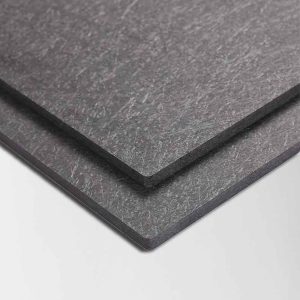
Looking for Solder Pallet Materials?

Get your personalized quote in minutes!

Methods and Applications

  • Wave Soldering: Uses a dynamic wave of molten solder. It is primarily used for Through-Hole Technology (THT) components, where long pins must be inserted through the board to reach the solder source.
  • Reflow Soldering: Uses hot air to melt pre-placed solder. It is the gold standard for Surface Mount Technology (SMT), where flat leads or terminals sit directly on the board surface.
FeatureWave SolderingReflow Soldering
Solder Joint QualityReliable, bright, and full joints.Highly precise with high success rates.
Operational AdvantageSimple operation and energy-efficient for mass production.Uniform heating prevents “thermal shock” (sudden temperature changes).
Equipment TypeSolder bath with pump system.Conveyor-based oven with multiple heating zones (e.g., Infrared).

Why Tooling Design Differs: A Necessity for Protection

The fundamental differences in how heat and solder are applied dictate the specific design of auxiliary jigs and fixtures.

1. Why does Wave Soldering need a “Pallet”?

The defining feature of wave soldering is that the bottom of the PCB makes direct contact with flowing liquid solder. This creates two major challenges:

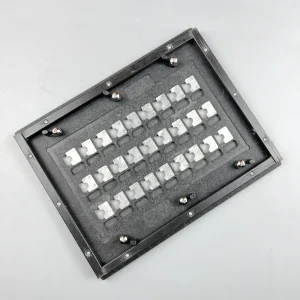
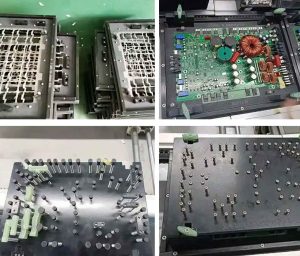
  • Shielding Requirements: Modern PCBs often use “mixed-assembly” (both SMT and PTH). If an unprotected board passes through the wave, previously soldered SMT components on the bottom (like tiny capacitors) would be washed away or short-circuited. A Wave Solder Pallet features precision-milled cutouts that expose only the PTH pins while physically shielding the SMT components.
  • Deformation and Support: At temperatures exceeding 250°C, PCBs—especially thin or large ones—can sag or warp under the upward pressure of the solder wave. The pallet acts as a rigid “straitjacket,” holding the PCB flat against thermal and mechanical stress.

A wave solder pallet is a composite of a protector, pressure plate, and carrier. Its primary mission is physical shielding combined with anti-deformation.

2. Why does Reflow Soldering need a “Support Jig”?

Reflow soldering happens in a static, high-temperature environment without the physical impact of a liquid wave. The risks here are purely thermal.

  • Warpage Prevention: While peak temperatures are similar to wave soldering (240-260°C), the duration of high heat is much longer (40-90 seconds). For ultra-thin PCBs (<1.0mm) or Flexible Printed Circuits (FPC), the resin loses rigidity, leading to “warpage.” This causes defects like “tombstoning” (components standing up) or bridging.
  • The Role of Support Jigs: These jigs (often using magnetic clamps) hold the PCB edges or support the center to ensure the board remains perfectly flat throughout the heating cycle. Unlike wave soldering, shielding is rarely needed because the solder paste is already precisely placed.

A reflow support jig is a high-temperature stability platform. Its focus is entirely on maintaining flatness to prevent SMT defects.

The differences between wave and reflow soldering—from their physical principles to the components they serve—directly dictate their tooling requirements.

  • Wave Soldering pallets focus on shielding and impact resistance against dynamic molten metal.
  • Reflow Soldering jigs focus on flatness and warpage control during prolonged heat exposure.

Understanding this logic chain is essential for any manufacturing engineer aiming to optimize process flow and ensure zero-defect soldering quality.

Share this article:

Recent Posts

Leave a message

* Thank you for visiting our website. We hope you found the information you were seeking.
* If you have any questions about our products, pricing, or would like to schedule a consultation, please contact us.